A trading idea is not an engine.
Options OS gives your coding agent the definitions, specifications and libraries to build crypto-options engines, so it resolves the hard decisions with you instead of inventing them.
Options OS gives your coding agent the definitions, specifications and libraries to build crypto-options engines, so it resolves the hard decisions with you instead of inventing them.
- 0101market ideamarket ideaacceptedaccepted
- 0202data qualitydata qualityacceptedaccepted
- 0303signalssignalsacceptedaccepted
- 0404instrumentsinstrumentsacceptedaccepted
- 0505sizingsizingacceptedaccepted
- 0606ordersordersopenopen
- 0707hedginghedgingopenopen
- 0808settlementsettlementacceptedaccepted
- 0909failuresfailuresopenopen
- 1010operator controlsoperator controlsacceptedaccepted
Staged, accepted, verified: before and after code
Each stage closes with an accepted artifact, and the next stage starts from it.
- Define
—Complete the trading engine intent with a web-based reasoning model. Unresolved decisions stay marked, not filled in. - Translate
/translate-domain-intentTurn the intent into engine, operations and scenario specifications. Gaps go back to the intent; the agent does not invent policy. - Architect
/architect-systemSet component boundaries, who owns state, where side effects happen and which libraries and venue binding the engine uses. - Contract and plan
/write-buildable-specification · /create-implementation-planWrite implementation-ready specifications, then plan dependency-ordered packets the agent builds one at a time. - Execute
/execute-implementation-planBuild the packets in order; each closes with tests, invariant checks, conformance and recorded commands and outcomes. - Verify
pre-commit run --all-filesRun Ruff, Mypy, package tests, architecture and invariant enforcement, and control tests.
Every missing decision gives the agent room to invent financial meaning
A strategy sentence leaves decisions open. A coding agent cannot build or operate the engine without answering them, so it guesses.
| Without Options OS | With Options OS |
|---|---|
| The agent invents the financial decisions a strategy leaves open | The intent surfaces every decision before the build |
| Rebuild options infrastructure around every strategy | Compose an existing options-native foundation |
| Agents infer boundaries from scattered code | Specifications and contracts define the system |
| Venue behavior leaks into engine logic | Engine code consumes normalized venue facts, as the implemented Deribit adapter shows |
| Generated code is accepted on appearance | Verification is part of the build path |
A foundation the agent composes, not rebuilds
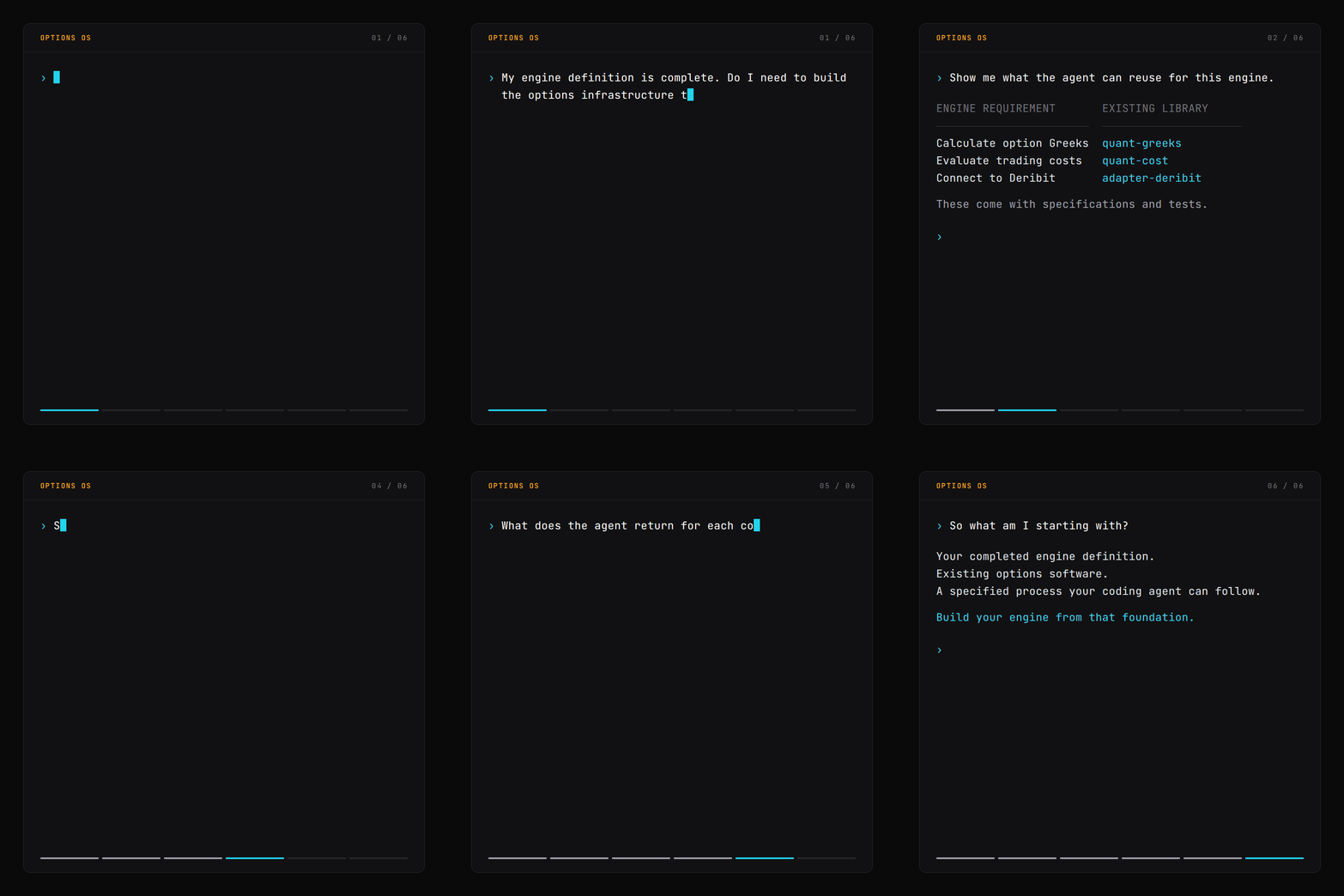
Financial meaning is defined once across units, instruments, Greeks, costs, risk, orders and settlement, and every engine uses the same definitions.
Intent and templates
Trading engine intent plus engine, operations and scenario specification templates. Define the strategy, risk limits, entry and exit rules, and expected behaviour before the agent starts building.
Options-native foundations
21 Python libraries covering trading models, options mathematics, portfolios, decisions, infrastructure and exchange integration, each with its own specification and tests.
Agent controls
Skills, workflows, hooks and tools for Claude Code and Codex. Repository checks stop the agent weakening tests or claiming verification it did not run.
Options OS supplies the foundation. You define the engine
| Owner | Area |
|---|---|
| Options OS | Options-native semantics, libraries and specifications |
| Options OS | Implemented Deribit exchange adapter |
| Options OS | Trading engine intent and specification templates |
| Options OS | Claude Code and Codex skills, workflows, hooks and tools |
| Options OS | Invariants, tests and architecture enforcement |
| You | Strategy, trading signals and PnL mechanism |
| You | Risk limits, lifecycle and operating policy |
| You | Hosting, deployment, credentials and capital |
| You | Operational validation and live approval |
| You | Review of specifications and generated code; Python experience helps |
- Options OS
- Options-native semantics, libraries and specifications
- Options OS
- Implemented Deribit exchange adapter
- Options OS
- Trading engine intent and specification templates
- Options OS
- Claude Code and Codex skills, workflows, hooks and tools
- Options OS
- Invariants, tests and architecture enforcement
- You
- Strategy, trading signals and PnL mechanism
- You
- Risk limits, lifecycle and operating policy
- You
- Hosting, deployment, credentials and capital
- You
- Operational validation and live approval
- You
- Review of specifications and generated code; Python experience helps
Who builds Options OS